
articles
Hiking Shoes vs. Boots vs. Trail Runners: Which Is Best?
Jul
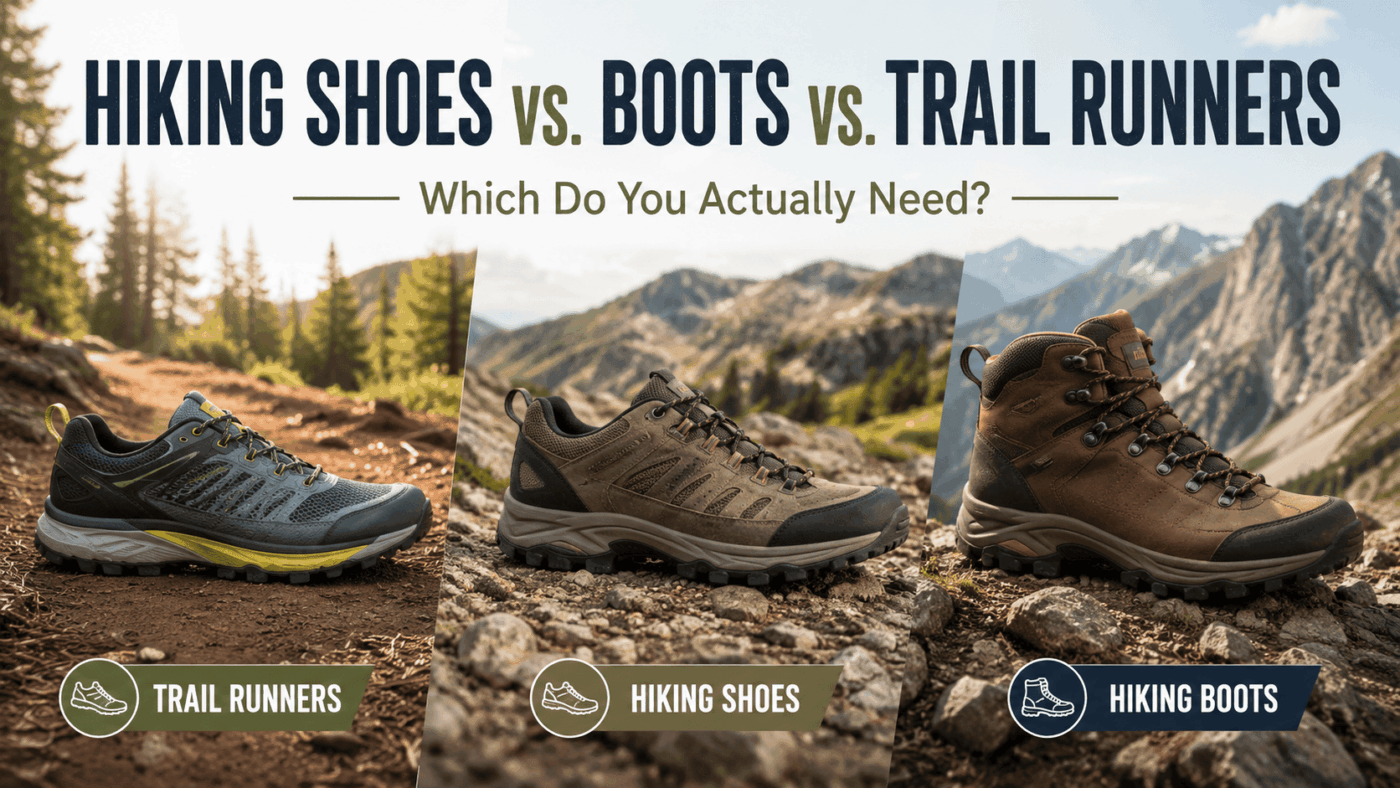
Choosing between hiking shoes, hiking boots, and trail runners is less complicated than it first appears.
For most day hikers on maintained or moderately uneven trails, hiking shoes are the best all-around option. They provide more protection and stability than trail runners without the extra weight and stiffness of hiking boots.
Choose hiking boots when you expect rough terrain, a heavy backpack, cold weather, mud, snow, or repeated contact with rocks and debris.
Choose trail runners when you want lightweight, breathable footwear for fast hiking, warm weather, long distances, and relatively light loads.
The correct choice ultimately depends on five things:
- The terrain beneath your feet
- The weight you are carrying
- The weather and season
- Your preferred pace
- The fit and stability of the footwear
There is no single winner for every hiker. The best footwear is the option that matches your actual trail, not the option that simply looks the most rugged.
Hiking Shoes vs. Hiking Boots vs. Trail Runners: Quick Comparison
| Feature | Trail Runners | Hiking Shoes | Hiking Boots |
|---|---|---|---|
| Weight | Lightest | Moderate | Heaviest |
| Flexibility | High | Moderate | Low to moderate |
| Underfoot stability | Low to moderate | Moderate to high | High |
| Ankle coverage | Low | Low | Mid or high |
| Rock and toe protection | Moderate | High | Highest |
| Breathability | Usually excellent | Good | Moderate |
| Durability | Moderate | High | Usually highest |
| Drying speed | Fast | Moderate | Slow |
| Cold-weather performance | Limited | Moderate | Best |
| Heavy-pack suitability | Limited | Moderate | Best |
| Best use | Fast hikes and light loads | Most day hikes | Rough terrain and demanding conditions |
These are category-level differences, not fixed rules. A supportive trail runner can feel more stable than a very flexible hiking shoe, while a lightweight modern boot can feel less restrictive than a traditional leather boot.
The Fastest Way to Choose
Use these three verdicts as your starting point:
Pick trail runners if:
- You hike quickly or cover long distances
- Your backpack is relatively light
- The trail is maintained or moderately technical
- You normally hike in warm or dry conditions
- Breathability and low weight matter most
- You want footwear that can also be used for trail running
Browse RAX trail running and outdoor running shoes for lighter options designed for active movement.
Pick hiking shoes if:
- You mainly take day hikes
- You encounter dirt, gravel, roots, rocks, and moderate slopes
- You want a balance of protection and flexibility
- You do not need full ankle coverage
- You want one versatile pair for several types of outdoor activity
- You find boots too heavy but trail runners too soft
Explore the complete range of RAX hiking shoes.
Pick hiking boots if:
- You regularly carry a heavier backpack
- You hike over loose, rocky, steep, or unpredictable terrain
- You need greater protection from rocks, mud, snow, or trail debris
- You hike in cold or wet seasons
- You prefer a firmer platform underfoot
- Your routes include multi-day trekking or off-trail sections
Browse RAX hiking boots for more protective options.
What Are Trail Runners?
Trail runners are running shoes built specifically for unpaved surfaces.
Compared with ordinary road-running shoes, they generally have grippier outsoles, more aggressive tread, stronger uppers, and added protection around the toes. They retain the cushioning, flexibility, and lightweight construction associated with running footwear.
Their main advantages are:
- Low weight
- Flexible movement
- Breathability
- Fast drying
- Comfortable cushioning
- Natural performance at a faster pace
The trade-off is that trail runners generally provide less protection, structure, and long-term durability than dedicated hiking footwear.
They are especially popular among fast hikers and people carrying lightweight gear. Outdoor footwear guides commonly recommend considering trail runners when the hiker has stable ankles, a light or moderate pack, and terrain that does not demand maximum protection.
What Are Hiking Shoes?
Hiking shoes occupy the middle ground between trail runners and hiking boots.
They are normally low-cut like trail runners, but their construction is more hiking-focused. This can include a firmer midsole, a more protective upper, a stronger toe cap, a wider or more stable outsole, and materials designed to resist abrasion.
A good hiking shoe provides:
- More structure than a trail runner
- Better rock and toe protection
- Greater durability
- Good traction on mixed terrain
- Less weight than most hiking boots
- More freedom around the ankle
For many hikers, this combination makes hiking shoes the most practical choice.
They work particularly well for day hiking, weekend walks, travel, light backpacking, and maintained mountain trails. They also transition more easily from the trail to everyday use than traditional hiking boots.
Consider options such as the RAX Outdoor Shoes when you want a low-cut outdoor shoe rather than a full boot.
What Are Hiking Boots?
Hiking boots are more structured and protective than hiking shoes or trail runners.
Most hiking boots use a mid-cut or high-cut design that covers the ankle. They often have firmer midsoles, durable uppers, deeper tread, stronger toe protection, and greater resistance to mud, debris, cold, and rough trail surfaces.
Their main strengths include:
- A stable platform for uneven ground
- Better protection from rocks and trail debris
- Greater suitability for heavier packs
- Improved coverage in mud, snow, and cold weather
- Longer potential service life
- More confidence on demanding routes
The disadvantages are additional weight, reduced flexibility, slower drying, and a greater chance of feeling warm during summer hikes.
Modern hiking boots can be significantly lighter and more cushioned than older boot designs, but they still prioritize protection and stability over speed.
For demanding trails, consider the RAX Trail Climbing Hiking Boots. For colder conditions, see the RAX Winter Trekking and Hiking Boots.
Decision Factor 1: What Type of Terrain Will You Hike?
Terrain should be your first consideration.
Smooth and maintained trails
Trail runners are usually sufficient for:
- Packed dirt
- Park trails
- Forest paths
- Dry grass
- Gravel tracks
- Routes with limited elevation change
Hiking shoes are also suitable, particularly when you want more protection or durability.
Moderately rocky or uneven trails
Hiking shoes are often the strongest choice for:
- Exposed roots
- Loose gravel
- Small rocks
- Moderate inclines
- Uneven forest trails
- Occasional stream crossings
They provide a more stable and protective platform without automatically requiring the weight of boots.
Rough, steep, or unpredictable terrain
Hiking boots become more valuable when the trail includes:
- Large loose rocks
- Sharp scree
- Steep descents
- Deep mud
- Snow
- Repeated off-trail movement
- Heavy vegetation or trail debris
A trail runner can still be used by an experienced hiker in some of these conditions, but it offers a smaller margin of protection.
Terrain verdict: Choose trail runners for smoother trails, hiking shoes for mixed terrain, and hiking boots for the most demanding surfaces.
Decision Factor 2: How Heavy Is Your Backpack?
Pack weight affects how much structure and stability you may want beneath your feet.
A daypack containing water, snacks, a jacket, and basic supplies normally does not require a heavy boot. Trail runners or hiking shoes can work well, depending on the terrain.
As pack weight increases, your footwear must manage more force during each step. A firmer midsole and more stable outsole can feel especially valuable on descents, uneven surfaces, and long trekking days.
There is no universal backpack-weight limit at which every hiker must switch to boots. Your body weight, strength, experience, terrain, footwear fit, and history of ankle problems all affect the decision.
Use this as a practical guide:
- Light daypack: Trail runners or hiking shoes
- Moderate overnight pack: Supportive hiking shoes or lightweight boots
- Heavy multi-day pack: Hiking boots are usually the safer starting point
Pack-weight verdict: The heavier your load and the rougher the terrain, the more useful structured hiking footwear becomes.
Decision Factor 3: Do Hiking Boots Really Provide Better Ankle Support?
Hiking boots provide more ankle coverage, but collar height is not the only feature that determines stability.
Overall stability also depends on:
- How securely the heel is held
- The stiffness of the midsole
- The shoe’s resistance to twisting
- The width and shape of the outsole
- The quality of the lacing system
- How well the footwear fits your foot
- The hiker’s ankle strength and balance
A tall but poorly fitting boot may feel less stable than a properly fitted hiking shoe with a firm platform. The Appalachian Mountain Club notes that torsional rigidity, or resistance to twisting, is an important part of footwear stability.
The higher collar of a boot can still provide useful coverage, tactile feedback, and protection from debris. Some hikers also feel more confident in boots, especially when carrying a heavier backpack.
However, boots should not be treated as a guarantee against ankle injuries.
People with repeated ankle sprains, existing instability, or pain should base their decision on professional medical advice rather than relying only on footwear height.
Ankle-support verdict: Choose footwear based on total fit and stability, not collar height alone.
Decision Factor 4: What Season Will You Be Hiking In?
Warm and dry conditions
Trail runners usually provide the best ventilation. Their lighter uppers allow heat and moisture to escape more easily during fast or long hikes.
Hiking shoes are a good alternative when you want greater protection without trapping as much warmth as a full boot.
Rain and wet trails
Waterproof hiking shoes and boots can keep external moisture out during shallow puddles, wet grass, and brief rain.
However, waterproof footwear can also hold moisture once water enters through the opening. Non-waterproof trail runners may get wet more quickly but often drain and dry faster.
Your best choice depends on whether you want to resist water entry or recover quickly after becoming wet.
Cold weather and snow
Hiking boots are generally the strongest option. Their greater coverage, thicker construction, and compatibility with heavier socks make them better suited to low temperatures.
For winter hiking, choose a model specifically designed for the expected temperature, snow depth, and traction requirements. A standard waterproof boot is not automatically an insulated winter boot.
Season verdict: Choose trail runners for warm conditions, hiking shoes for general three-season use, and appropriate hiking boots for cold, snow, and prolonged exposure.
Decision Factor 5: How Much Durability Do You Need?
Trail runners prioritize low weight and cushioning. Softer midsoles, lightweight mesh, and flexible construction can wear more quickly when repeatedly exposed to sharp rocks and abrasive surfaces.
Hiking shoes usually use tougher uppers, firmer midsoles, and additional protective overlays. This makes them a better long-term option for frequent recreational hikers who still want low-cut footwear.
Hiking boots are typically the most durable category, especially when made with sturdy synthetic materials or leather. Their soles and protective sections are designed for repeated contact with difficult terrain.
Durability still varies considerably by individual model. A premium trail runner may outlast a poorly constructed boot, so category alone should not determine your purchase.
Durability verdict: Boots generally prioritize longevity, trail runners prioritize low weight, and hiking shoes offer a balance of both.
Are Trail Running Shoes Good for Hiking?
Yes, trail running shoes can be very good for hiking.
They are particularly suitable when:
- The trail is maintained or moderately technical
- Your backpack is light
- You prefer a faster pace
- The weather is warm
- You value breathability
- The shoe fits securely
- The outsole has suitable traction for the terrain
Trail runners are not simply road-running shoes with a different appearance. Their tread and protective construction are designed for off-road surfaces.
However, they may not be the best choice for heavy backpacking, deep snow, prolonged mud, sharp scree, or terrain where greater underfoot protection is needed.
The RAX Ventilation Hiking Outdoor Running Shoes are an example of hybrid footwear designed around hiking and active outdoor movement.
You can also read Exploring the Versatility of Trail Running Shoes for Hiking Adventures for a closer look at this crossover category.
Can You Run in Hiking Shoes?
You can run briefly in hiking shoes, but most hiking shoes are not designed for regular running.
Running footwear normally requires greater flexibility, smoother heel-to-toe movement, and cushioning that performs well during repeated higher-impact steps. Hiking shoes are often firmer, heavier, and less flexible because they prioritize stability and protection.
Running a short section of trail in hiking shoes is unlikely to be a problem when the shoes fit comfortably. Using them for regular trail-running sessions may feel inefficient and could create pressure or rubbing because of their heavier construction.
Choose trail runners when running will be a regular part of the activity.
Choose hiking shoes when walking, hiking, and stability are the priorities.
Hiking Boots vs. Hiking Shoes: Which Is Better for Beginners?
Most beginners do not automatically need hiking boots.
A well-fitted pair of hiking shoes is often the best starting point for ordinary day hikes because it offers:
- Good traction
- Toe protection
- Moderate stability
- Lower weight
- Easier movement
- Less break-in time
Beginners should consider hiking boots when their first routes involve rough mountain terrain, cold weather, snow, heavy equipment, or significant off-trail travel.
The right fit matters more than buying the heaviest available option. A lighter shoe that fits correctly will usually perform better than a more protective boot that causes heel movement, pressure, or blisters.
For more terrain-based guidance, read Tell Me Where You Walk, I’ll Tell You What to Wear.
Related guide: [Insert the title and URL for Topic #1 here.]
How Should Hiking Footwear Fit?
The best footwear category will not help if the fit is wrong.
Your hiking shoes, boots, or trail runners should:
- Hold the heel securely
- Avoid pressure across the toes
- Provide enough room for the toes to move
- Feel secure on slopes
- Avoid rubbing around the heel and ankle
- Work comfortably with your hiking socks
- Remain comfortable after your feet expand during activity
Try footwear later in the day when possible, since feet can become slightly larger after hours of standing and walking.
Wear the socks you plan to use on the trail. Walk on an incline or stairs to check whether your heel lifts or your toes slide into the front.
Do not assume that every model from the same brand will fit identically. The shape, materials, and internal volume can vary between designs.
Can One Pair Handle Every Type of Hiking?
No single pair is perfect for every trail and season, but hiking shoes come closest for many recreational hikers.
A supportive hiking shoe can handle:
- Day hikes
- Forest trails
- Gravel
- Moderate mountain routes
- Travel
- Light backpacking
- Everyday outdoor use
It may still be inadequate for deep snow, very heavy packs, prolonged winter exposure, or highly technical terrain.
Trail runners are more specialized toward speed and low weight. Hiking boots are more specialized toward protection and demanding conditions. Hiking shoes sit between the two.
Final Verdict: Hiking Shoes vs. Boots
When comparing hiking shoes vs. boots, neither category is universally better.
Choose hiking shoes for day hiking, mixed terrain, moderate loads, and the best balance of comfort, protection, and weight.
Choose hiking boots for rough surfaces, heavy backpacks, colder seasons, mud, snow, and routes where protection is more important than speed.
Choose trail runners for fast hiking, warm weather, long distances, lighter packs, and hikers who prefer flexible footwear.
For most people buying their first dedicated pair of hiking footwear, a properly fitted hiking shoe is the most versatile starting point. From there, your experience will tell you whether your next pair should be lighter and faster or more structured and protective.
Explore the complete RAX outdoor footwear collections:
Frequently Asked Questions
What is the main difference between hiking shoes and hiking boots?
Hiking shoes are low-cut, lighter, and more flexible. Hiking boots cover more of the ankle and generally provide greater structure, weather protection, and resistance to rough terrain.
Are hiking shoes better than boots for day hikes?
Hiking shoes are usually more practical for ordinary day hikes because they provide adequate traction and protection without the additional weight of boots. Boots become more useful when the trail, weather, or pack weight is demanding.
Are trail runners better than hiking shoes?
Trail runners are better for low weight, breathability, fast movement, and running. Hiking shoes are better for underfoot structure, durability, and protection. The best option depends on how and where you hike.
Can trail runners be used for backpacking?
Trail runners can be used for backpacking when the load is relatively light, the footwear fits securely, and the terrain does not require maximum protection. Hiking shoes or boots may be more suitable for heavier loads and rougher routes.
Do hiking boots prevent rolled ankles?
Hiking boots can provide coverage and a firmer feeling around the ankle, but they cannot guarantee that an ankle will not roll. Fit, heel security, midsole stiffness, outsole stability, terrain, balance, and ankle strength also matter.
Should hiking footwear be waterproof?
Waterproof footwear is useful in cold rain, wet grass, shallow mud, and conditions where keeping external water out is important. Breathable non-waterproof footwear may be more comfortable in warm weather and can dry faster after becoming soaked.
Can you wear hiking shoes every day?
Yes. Many hiking shoes can be worn for daily walking, travel, and outdoor work. Their firmer construction may feel heavier than an ordinary sneaker, but it can provide additional traction and protection.
Which option lasts the longest?
Hiking boots usually have the highest durability, followed by hiking shoes and then trail runners. Actual lifespan depends on construction, terrain, frequency of use, walking style, care, and fit.